The formula at a glance
Each key ingredient is shown with its place on the pack and the strength of its evidence. The pack lists ingredients from highest to lowest concentration, so #1 is the largest share. Concentrations are not printed, and below 1% manufacturers may list ingredients in any order.
Hydrator
Antioxidant
Brightener
Key ingredients
- HydratorClinical trialHyaluronic acidSodium HyaluronateA water-binding molecule your skin already makes, used to hydrate the surface and soften the look of fine lines.
- HydratorReviewHydrolyzed collagenHydrolyzed CollagenCollagen protein broken into small fragments that help the skin surface hold moisture.
- PeptideClinical trialAcetyl hexapeptide-8 (peptide)Acetyl Hexapeptide-8A lab-made six-amino-acid peptide, often sold as Argireline, used to soften the look of expression lines.
- AntioxidantClinical trialGlutathioneGlutathioneAn antioxidant your body makes, used in skincare for a brighter, more even-looking tone.
- BrightenerReviewAlpha-arbutinAlpha-ArbutinA brightening ingredient that slows the enzyme skin uses to make pigment, for a more even-looking tone.
- Marine extractReviewKelp extractMacrocystis Pyrifera (Kelp) ExtractAn extract of giant kelp, a brown seaweed rich in water-holding polysaccharides and minerals.
- Marine extractReviewRed seaweed (Irish moss)Chondrus CrispusIrish moss, a red seaweed whose carrageenans form soft, water-holding films on the skin.
- SootherReviewBeta-glucanBeta-Glucan · Yeast Beta-GlucanNatural sugars from oats, yeast and mushrooms, used to hydrate and calm the skin.
- HydratorLab and animalTremella (snow mushroom)Tremella Fuciformis PolysaccharideA polysaccharide from the snow mushroom that holds water on the skin surface.
- SootherLab and animalPurslane extractPortulaca Oleracea ExtractAn extract of purslane, an edible plant rich in antioxidants, used to soothe the skin.
How we grade the evidence
- Clinical trial
- Supported by at least one controlled human trial of the topical ingredient.
- Review
- Described in scientific reviews; human trials of the topical ingredient are few or mixed.
- Lab and animal
- Evidence comes mainly from cell, laboratory or animal studies, not human trials.
Most studies test a single ingredient at a known strength. The DermaGlass® pack does not list concentrations, so a study result shows what an ingredient can do, not a measured result for the mask.
The full ingredient list
All 21 ingredients, as listed on the pack in descending order of concentration. Linked names have their own page.
- Water
- Glycerin
- Butylene Glycol
- Glyceryl Glucoside
- Hydrolyzed Collagen
- Betaine
- Alpha-Arbutin
- Glutathione
- Chondrus Crispus
- Beta-Glucan
- Yeast Beta-Glucan
- Acetyl Hexapeptide-8
- Portulaca Oleracea Extract
- Tremella Fuciformis Polysaccharide
- Sodium Hyaluronate
- Macrocystis Pyrifera (Kelp) Extract
- PEG-60 Hydrogenated Castor Oil
- Ethylhexylglycerin
- Hydroxyacetophenone
- Ethyl Hexanediol
- 1,2-Hexanediol
The rest of the list is the base: water, glycerin and butylene glycol carry the serum; glyceryl glucoside and betaine add moisture; PEG-60 hydrogenated castor oil helps everything mix; ethylhexylglycerin, hydroxyacetophenone, ethyl hexanediol and 1,2-hexanediol keep the formula stable.
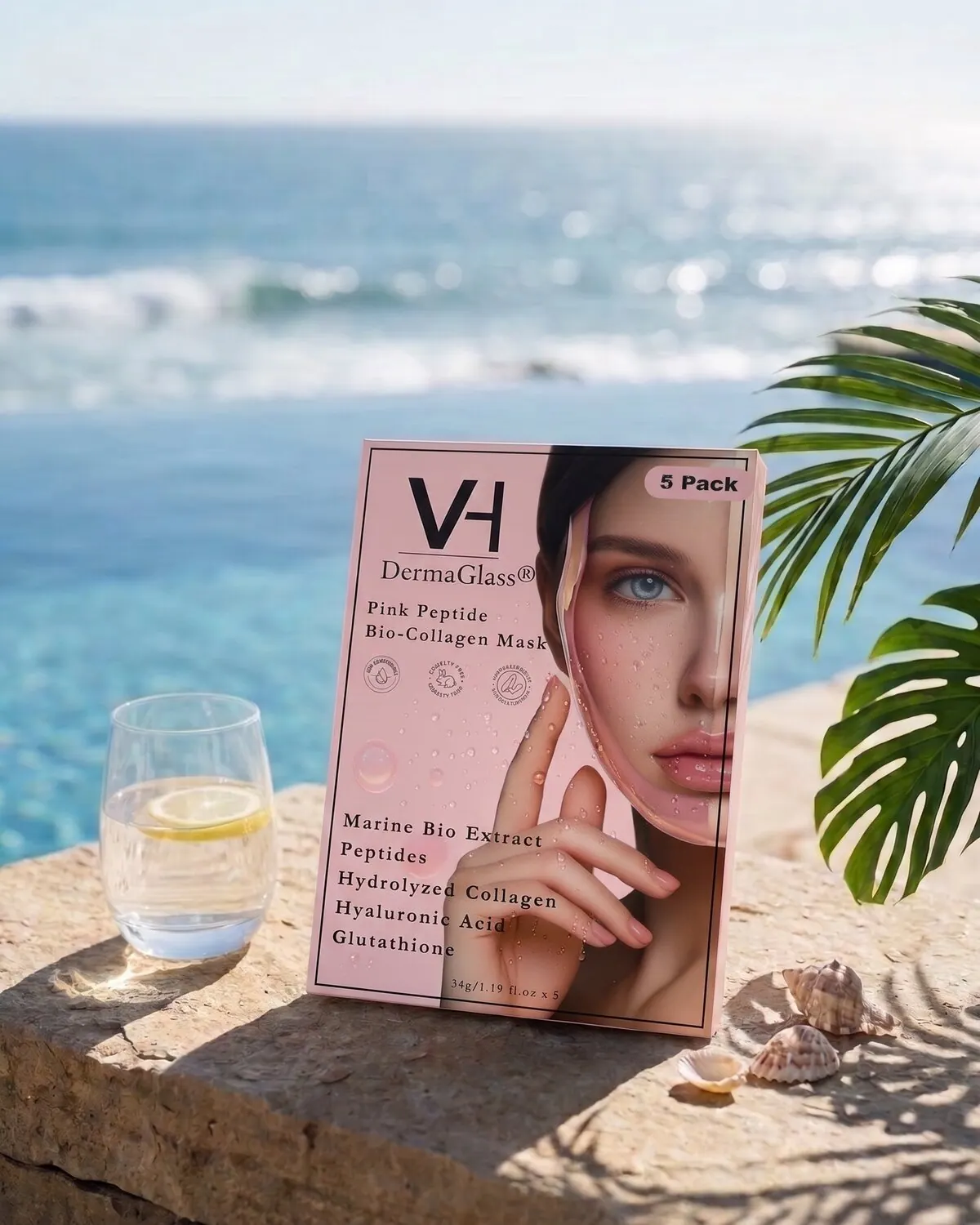
See DermaGlass® Pink Peptide Bio-Collagen Mask · DermaGlass® FAQ
Get DermaGlass®
Every ingredient above is in the DermaGlass® Pink Peptide Bio-Collagen Mask, sold in packs of five single-use masks on Amazon.ca.
More from the Research Desk
Our free food datasets look at skin from the inside: the VH-NCR nutrient-density rankings and the AGE food rankings, which track glycation compounds linked to skin aging. Ingredient pages are general information, not medical advice.