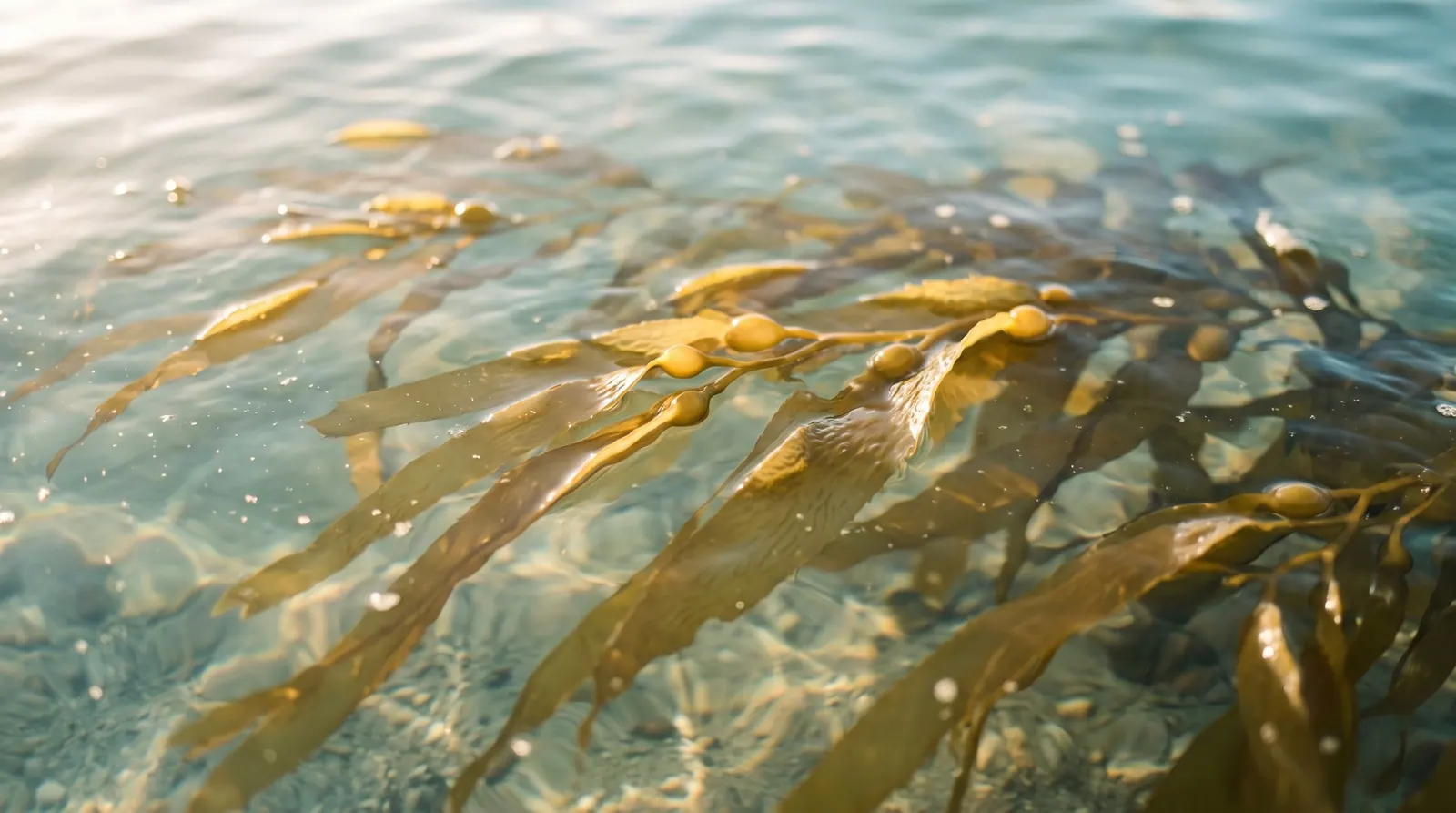
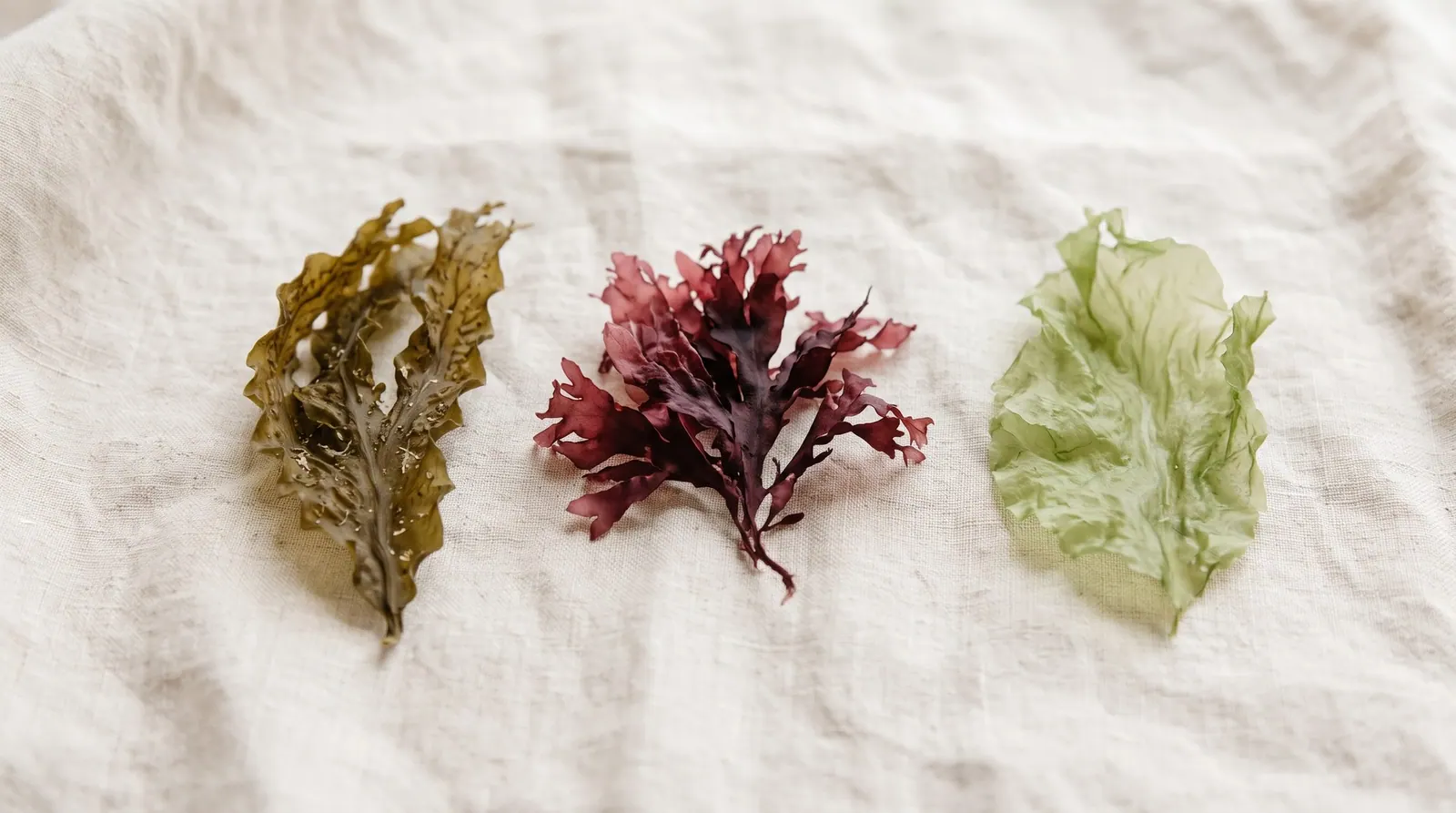
| Brown seaweed Fucus spiralis fractions | Lab: enzyme and cell tests | Antioxidant, collagenase, elastase, UVB-induced ROS | The most active fraction inhibited collagenase (0.037 µg/mL) and elastase (3.0 µg/mL) and reduced UVB-induced ROS (IC50 31.3 µg/mL). The authors link this to phlorotannins.3 |
|---|
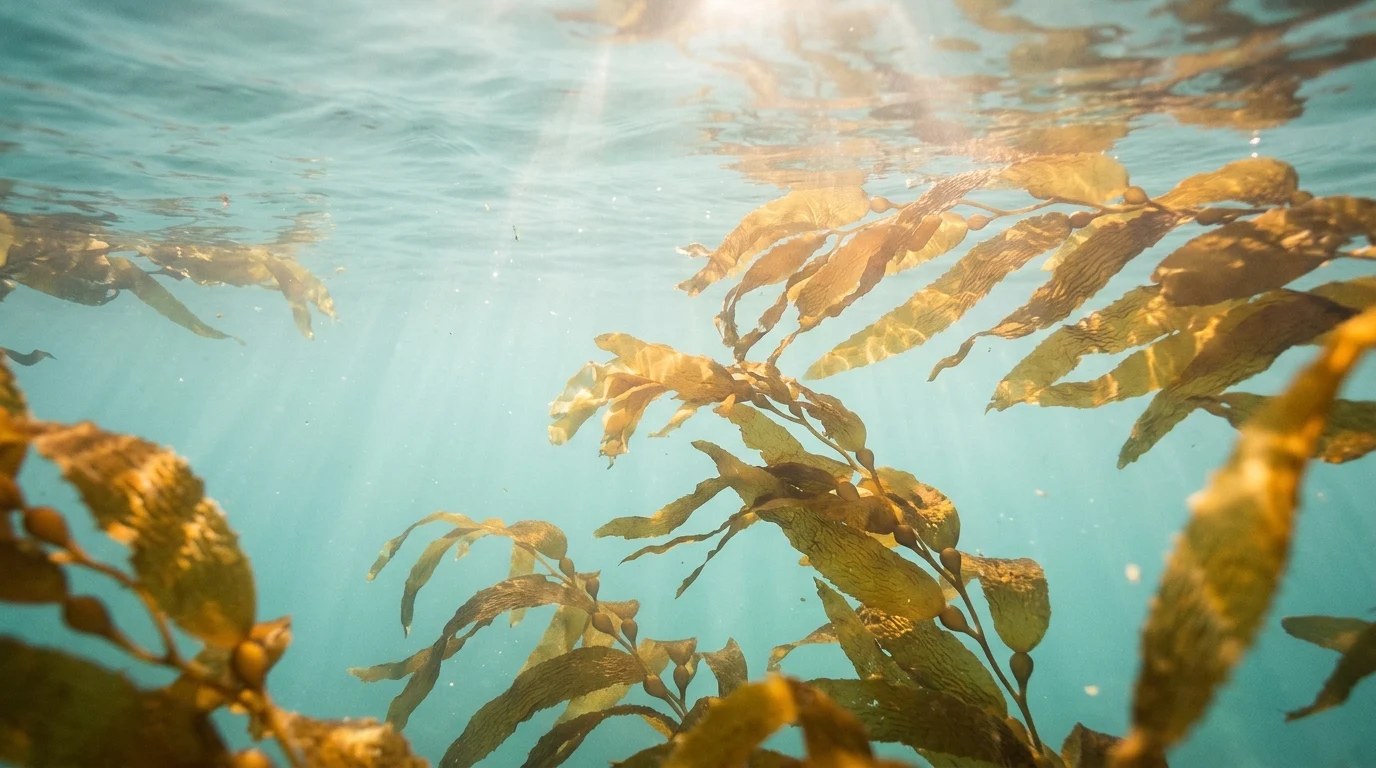
| A brown seaweed, five fractions | Lab: enzyme and cell tests | Antioxidant, collagenase, elastase, tyrosinase, ROS, TNF-α and IL-6 | The ethyl acetate fraction inhibited collagenase, elastase and tyrosinase (IC50 7.2, 4.8 and 85.9 µg/mL), reduced UVA and UVB ROS in mouse cells and lowered TNF-α and IL-6.4 |
|---|
| A brown macroalga from Djibouti, three purified fractions | Lab: chemistry and enzyme tests | Phenolic content, antioxidant, tyrosinase and elastase inhibition | The purification method changed which phlorotannins were enriched; the most structurally complex fraction was also the most bioactive, which the authors say is likely linked.5 |
|---|
| Brown macroalga Dictyopteris justii extract | Lab: enzyme test | Tyrosinase inhibition against kojic acid | IC50 of 0.51 mg/mL against 46.61 µg/mL for kojic acid, so it was much weaker than the reference.6 |
|---|
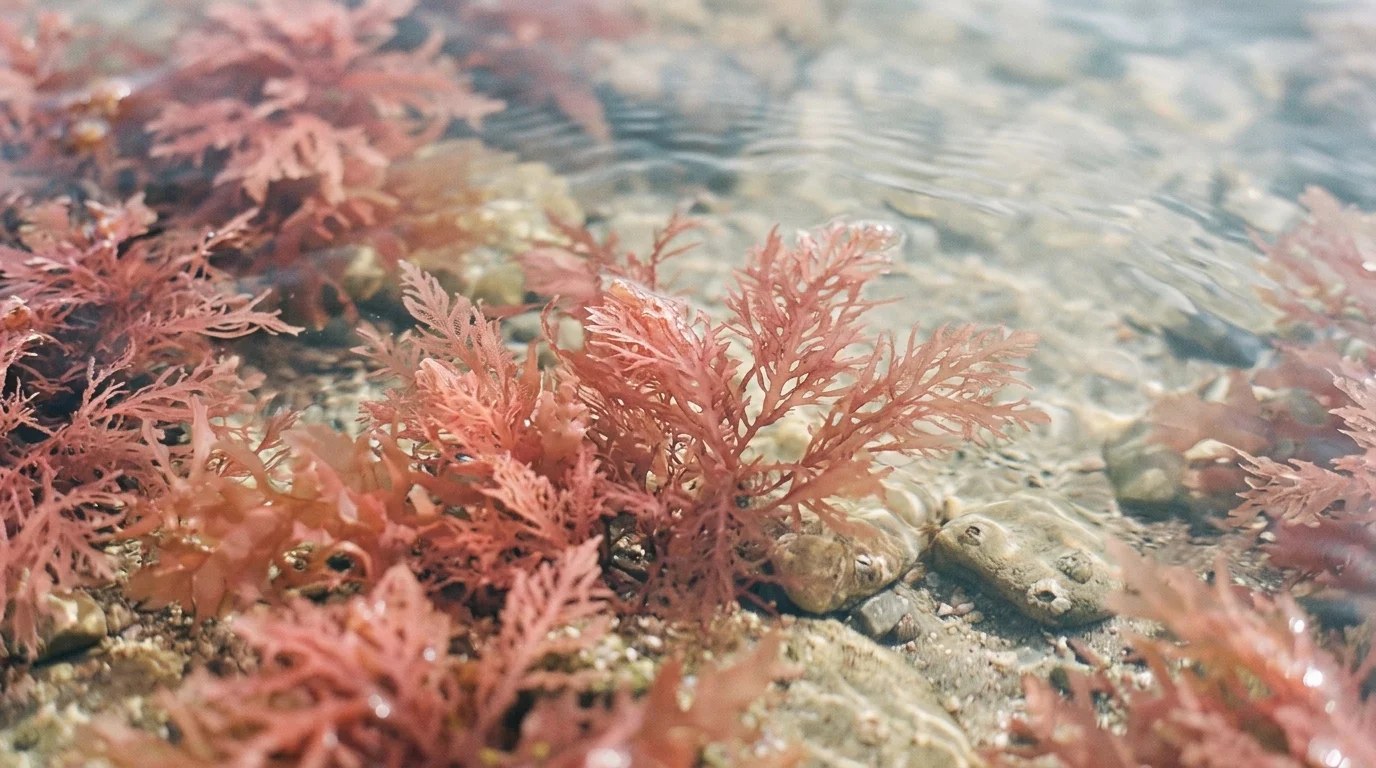
| Six red seaweeds, polysaccharides | Lab: chemistry and enzyme test | 3,6-anhydro-galactose, tyrosinase inhibition | Three polysaccharides inhibited tyrosinase by 24.2% to 26.8%.7 |
|---|
| 120 healthy volunteers, creams with 1% ulvan and thermal spring water | Human: cosmetic study | Skin hydration, tightness, scaling, tolerance | Enhanced hydration with ulvan and spring water, scaling reduced in the ulvan group, high tolerance. Some authors work for a seaweed producer and a cosmetics company.9 |
|---|