Seaweed Types · 3,6-anhydro-galactose polysaccharides
Red seaweed: polysaccharides in the lab.
The skin-relevant data we found on red seaweed is one laboratory study of its polysaccharides, which this page reports exactly.
In short
01
The study
The authors analysed the polysaccharides by gas chromatography-mass spectrometry. Polysaccharides from three species, and their degradation products, inhibited tyrosinase by 24.2% to 26.8%.1
They suggest the method could serve quality control and that these polysaccharides are potential cosmeceutical ingredients. That is a statement about potential. The test measured an enzyme, not skin colour.1
02
The wider tyrosinase literature
A 2025 study of seaweed extracts found that lipophilic extracts had the strongest activity, and used computer modelling to point to stigmasterol as a candidate. Its safety findings came from cell tests and predictions.2
What we could not confirm
The gaps, stated plainly.
- Whether red seaweed polysaccharides lighten or even out skin in people. We found no human trial.
- Safety and dose of these polysaccharides in a skincare product.
Questions
Common questions.
Does red seaweed lighten skin?
The evidence we found is a laboratory enzyme test. Polysaccharides from three red seaweeds inhibited tyrosinase by 24.2% to 26.8%, which does not show an effect on skin.1
What is 3,6-anhydro-galactose?
A sugar unit found in the polysaccharides of all six red seaweeds analysed in a 2020 study, with molar ratios to galactose from 1.0:1.0 to 1.0:3.1.1
Keep reading
Back to the full guide: Seaweed Types.
More in this guide
- Brown seaweed: fucoidan and phlorotannins.
- Green seaweed: ulvan and hydration.
Related research
From our library
Sources
Where every claim comes from.
Numbers in brackets link to these entries. Journal entries were read as their PubMed record, and study details come from PubMed, the US National Library of Medicine. See every source on the Research Desk, organised by page.
- [1] 3 Biotech (Xie and colleagues). Quantification of 3,6-anhydro-galactose in red seaweed polysaccharides and their potential skin-whitening activity.
- [2] Biotechnology Reports (Thong-Olran and colleagues). Seaweed-derived bioactives with anti-tyrosinase activity: a potential for skin-whitening cosmetics.
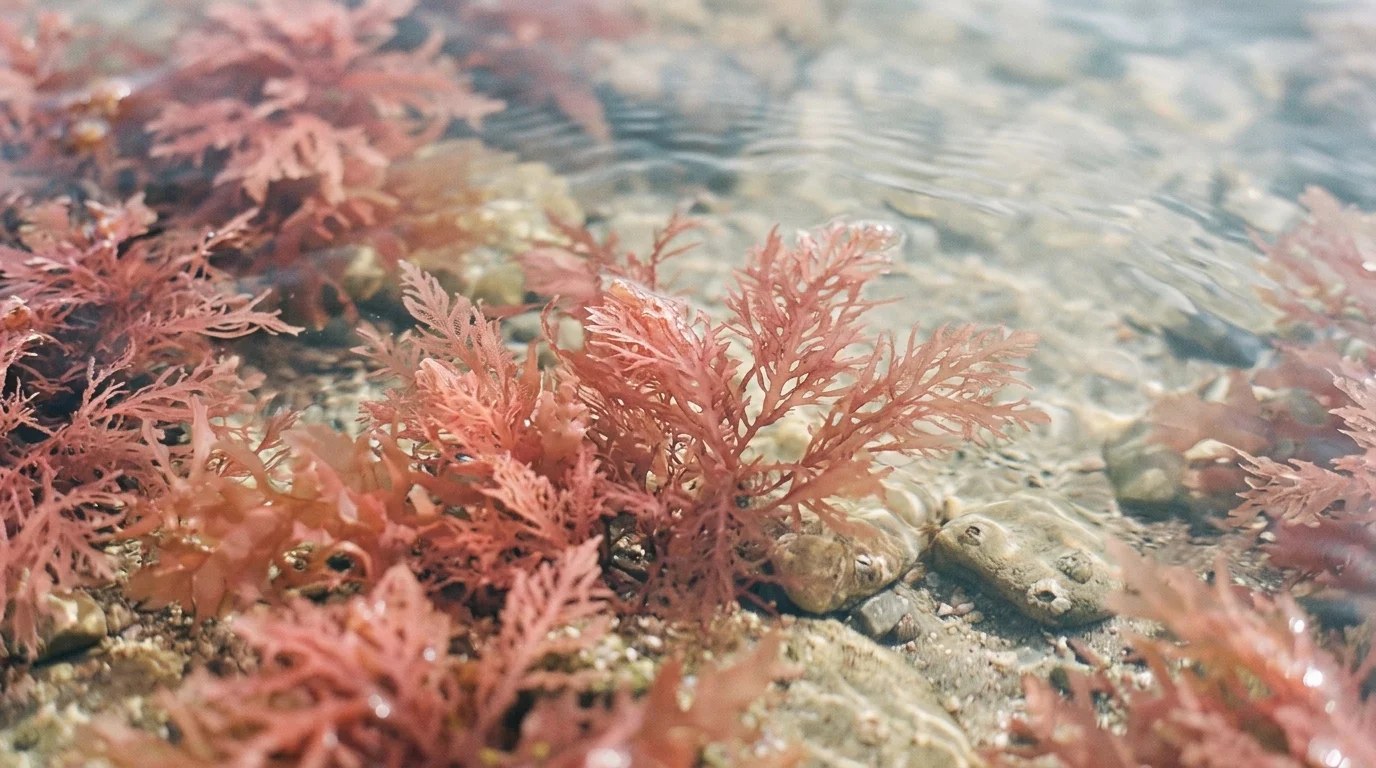
This page is general information drawn from published studies. It is not medical advice and makes no claim about any Vanu Health product. The image is an AI-generated illustration, not a study image. Last updated October 30, 2026.