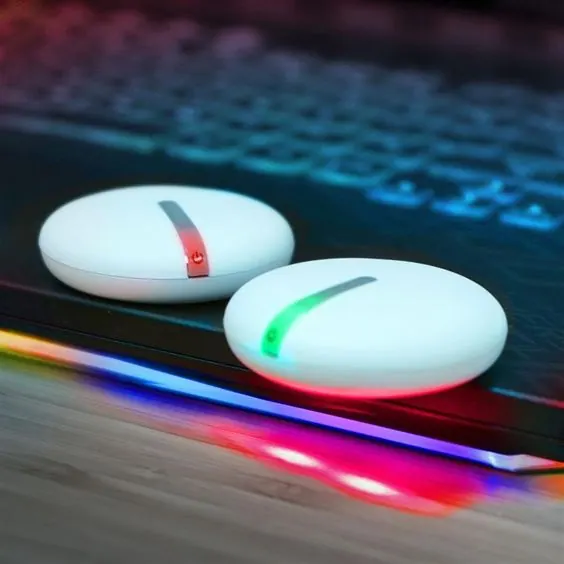
What is the Wellscare IASO?
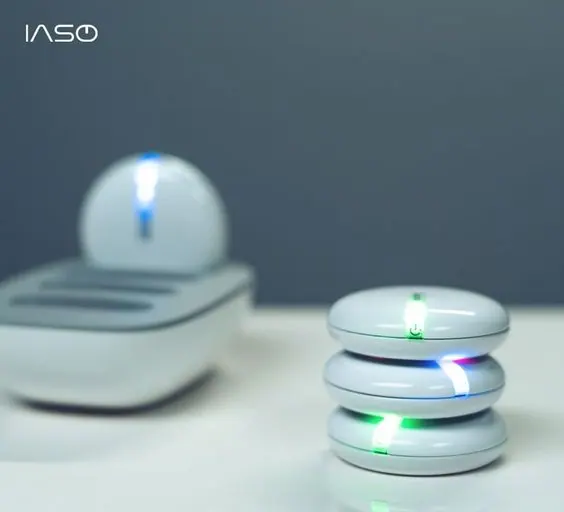
Wellscare sells two wearable photobiomodulation (PBM) devices for pain. IASO is a small hands-free unit, 48 × 48 × 12 mm and 28 g, that attaches with a band or adhesive patches. IASO Ultra is a larger home unit with a strap, a remote and three laser wavelengths plus a blue LED, aimed at bigger areas such as the lower back, shoulders and thighs.
The company calls IASO a “wearable, hands-free cold laser pain relief device.” Its website lists these two devices; the full range is below.
The IASO range
Wellscare’s website lists two wearable devices, both sold as photobiomodulation products for pain relief. Neither product page gives a price or a warranty. Check the maker’s page for current details.
IASO
Wearable, hands-free
For localized pain. Lasers at 650 and 830 nm, under 5 mW, with three modes: laser only, laser with continuous vibration, and laser with pulsed vibration. 28 g, rechargeable.
Maker’s product page (opens in a new tab)IASO Ultra
Home unit, larger areas
For the lower back, shoulders, upper arms and thighs. Lasers at 650, 830 and 905 nm (up to 20 mW), a 453 nm blue LED, and vibration. Up to 80 minutes of battery runtime.
Maker’s product page (opens in a new tab)
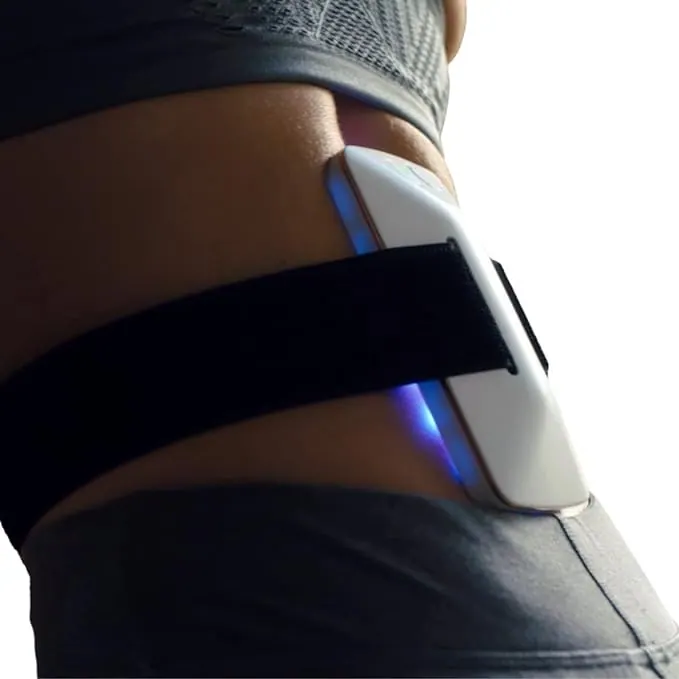
How it works
Low-level red and near-infrared light is absorbed by the mitochondria in cells, and is thought to change energy production and inflammatory signalling. This is the same photobiomodulation principle described on our Vielight and LumiThera pages. Wellscare says the light increases blood flow and speeds tissue recovery. Its site does not cite a study for those claims.
For the history and science of red and near-infrared light, see our book The Accidental Discovery of Redlight Therapy.
What the research shows
The company’s site describes PBM as “clinically proven” for pain and inflammation, and shows video and written testimonials from chiropractors, a physiotherapist and athletes. It cites no published study for IASO or IASO Ultra, and says there are “no adverse side effects” without citing safety data.
Systematic reviews of low-level laser therapy (LLLT) for musculoskeletal pain are mixed. A 2017 meta-analysis of 18 studies with 1,462 adults found that LLLT reduced pain compared with controls (pooled mean difference −0.85). Heterogeneity was very high (I² 85.6%), and the authors did not report a formal grade of evidence quality.
In January 2018 the Washington State health technology assessment concluded that LLLT’s efficacy for musculoskeletal conditions “has not been established.” It rated the overall quality of the evidence as “low or very low,” called the efficacy results “highly inconsistent,” and found LLLT “appears to be safe” in the short term.
We found no published trial of IASO or IASO Ultra. Results from one device do not carry over to another, because the wavelength, power and dose all matter.
Who it is for
Adults with mild, ongoing muscle or joint pain who want a home option to discuss with a clinician, and who accept that the evidence is weak.
Not a substitute for assessment of new, severe or spreading pain, or pain after an injury.
Safety
IASO Ultra is a class 3B laser, which can damage the eyes. Never look into the light or aim it at anyone’s eyes. IASO is class 3R, with less than 5 mW of output.
Ask a clinician before use if you are pregnant, have cancer or a suspected tumour, take a medicine that makes you sensitive to light, or have a thyroid condition.
The company’s “no adverse side effects” claim is not backed by a published safety study. Long-term safety data for LLLT are sparse.
Questions
Is IASO FDA approved?
The company does not claim approval. It says IASO is “FDA-REGISTERED,” which means the company is listed with the FDA. Registration does not mean the agency has cleared or approved the device for pain relief. We found no clearance record for IASO or IASO Ultra.
Does it work for pain?
The evidence is weak. Some trials of low-level laser show pain reduction, but a 2018 health technology assessment rated the overall evidence low or very low and the results inconsistent. We found no published study of IASO or IASO Ultra.
What is the difference between IASO and IASO Ultra?
IASO is a small, hands-free unit for localized areas, with 650 and 830 nm lasers under 5 mW. IASO Ultra is a larger home unit with 650, 830 and 905 nm lasers up to 20 mW, a blue LED, and a strap for bigger areas. The company recommends IASO for wrists and ankles.
Is it approved by Health Canada?
We found no Health Canada licence or statement on the company’s site. Check Health Canada’s medical device licence database, and ask the company, before you buy.
Sources
- Wellscare: home page (opens in a new tab)
- Wellscare: IASO product page (opens in a new tab)
- Wellscare: IASO Ultra product page (opens in a new tab)
- PubMed: low-level laser therapy and pain in musculoskeletal disorders, systematic review and meta-analysis (2017) (opens in a new tab)
- Washington State Health Technology Assessment: low-level laser therapy (January 2018) (opens in a new tab)
- FDA: medical device databases (510(k) and registration search) (opens in a new tab)
Vanu Health does not sell this device and is not paid by its maker. General information, not medical advice. Read our terms.